
Source : Canadian Chiropractic Association.
Traveling can be an exciting adventure, but the journey itself often comes with its own set of challenges for your body. Whether you’re walking through terminals, running to your gate, sitting for extended periods, or lifting heavy luggage, the combination of muscle fatigue, joint stiffness, and travel stress can make you feel worn out before you even reach your destination or in some cases, your flight. As chiropractors, we understand the toll that travel can take on your body and have suggestions on how to improve your comfort from the moment you step into the airport, to when you reach your destination.
Let’s start with when you arrive at the airport. You may have been sitting in a cab or train for some time and are now going to be waiting in security lines and walking through the terminal. We all know that walking through airports is no easy feat, especially when towing along your luggage. Stretching your hip flexors while waiting in line can help keep your stride comfortable and reduce the risk of hip or lower back pain.
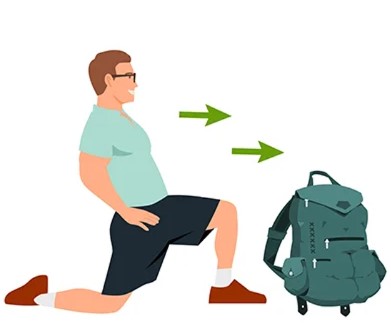
1. A hip flexor stretch before a long distance walk through the terminal
How to do it: Find an area with some open space and stand straight with your arms at your sides. Place your hands on your hips. Take a step forward with your right foot so you are standing in a split stance. Lower your right knee so it is bending at a 90-degree angle. With your left leg extended straight back behind you, you should feel a stretch in the left hip. Hold this position for 20-30 seconds, then switch legs.
Chiropractic Tip:
Even if you’re wearing running shoes, keeping your strides shorter can help to reduce the amount of force to your heels, feet, legs and back.
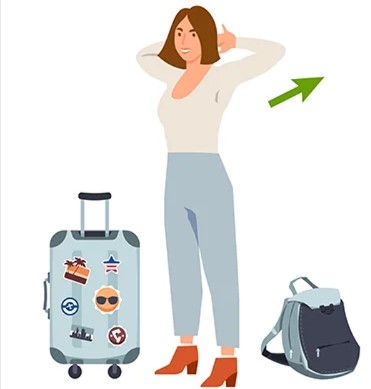
2. Prepare to lift your luggage into the overhead compartments with this upper back stretch
How to do it: Stand with your feet shoulder-width apart. Interlace your fingers behind your head and gently pull your elbows back, opening up your chest. Take a deep breath in, and as you exhale, gently arch your upper back, lifting your chest toward the ceiling. Hold this stretch for 20-30 seconds, feeling the tension release from your upper back.
Reminder! If you’re carrying a shoulder bag, remember to switch sides throughout your travels to distribute the load between your left and right shoulders.
3. A neck stretch after your snooze on the plane
How to do it: Sit up straight in your seat and slowly tilt your head to the right side, bringing your ear toward your shoulder. Use your right hand to gently pull your ear closer to your shoulder, deepening the stretch. Take some slow, deep breaths while you hold the stretch for 20-30 seconds, then switch to the left side. Be sure to keep your shoulders relaxed throughout the stretch.

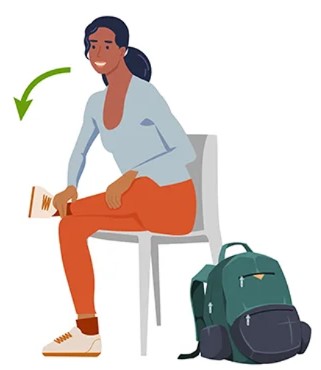
4. Try this lower back stretch after that long flight or layover
How to do it: Sit on the edge of your seat with your feet flat on the floor. Place one ankle over the opposite knee, forming a figure four with your legs. Gently lean forward, keeping your back straight, until you feel a stretch in your lower back and hips. Hold this position for 20-30 seconds, then switch sides.
Finally, you finished reading the last chapter of your novel as your flight lands at your destination. The thoughts of new foods and sightseeing keep your exhaustion at bay and you feel almost instantly rejuvenated! That is, until you see the line up for customs. Standing in long security lines or waiting for your flight can lead to discomfort in your back. A full back stretch can help relieve this muscle fatigue and tension, and keep you feeling physically refreshed.
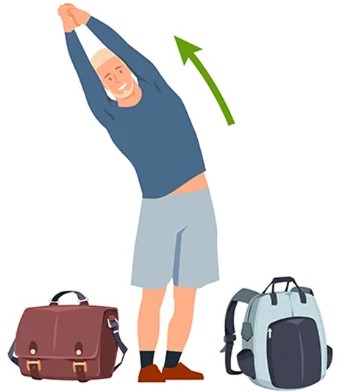
5. Stretching the full back while you’re standing in line
How to do it: Stand with your feet shoulder-width apart. Reach your arms overhead and clasp your hands together. Slowly lean to one side, stretching through the entire side of your body. Hold this position for 20-30 seconds, then switch to the other side. Finally, bend forward in attempt to touch your toes and roll your back up to stand up straight.
Chiropractic Tip: Research recommends standing up to move once every hour to reduce common areas of stiffness and muscle aches. When it is safe to do so, stand up and move for a few minutes!
By incorporating these simple stretches into your travel routine, you can help prevent common aches and pains associated with long journeys, whether you’re heading to the destination of your dreams or looking forward to returning to the comfort of your own home. A little bit of stretching can go a long way in keeping you comfortable and ready to enjoy your trip to the fullest.
 Centre chiropratique Dr Lepage chiropraticien