Piriformis Syndrome

March 2021 newsletter.

Text from “Running Doc’s Guide to Healthy Running”, from Dr. Lewis G. Maharam, MD.

Piriformis syndrome is – figuratively and literally – a pain in the butt, one that does an excellent imitation of the catchall ailment called sciatica.  This Pain can also show up in the lowermost portion of the back.  Therapy is possible but tricky.  Don’t try to diagnose and treat this one yourself.

Not long ago, for example, Paul, a 45-year-old patient of mine, came to me with what he described as a dull ache in the middle of one buttock.  It hurt him to run, and the pain was especially sharp as he was going up hills or even walking up stairs.  A string of doctors had pegged it as everything from a deteriorated spinal disc to that classic medical non sequitur, low back pain.  None apparently suspected the piriformis, one of the muscles deep in the rear of the pelvis that helps turn your leg outward and that runs alongside, and occasionally surrounds, the sciatica nerve.  Like any muscle, it can be overused and go into spasm, something that can also be triggered by tight hamstrings, prolonged sittings, or anything that twists the area.  When that happens – and especially when the sciatic nerve becomes involved – the pain is dulls, constant, and, it often seems, permanent.

Diagnosis is not difficult for anyone who has seen the condition before.  One or two simple exercises with the patient on a table can pinpoint it, and trained fingers can actually feel down to and sense the spasming muscle.  But diagnosis is only the start of treatment, and therapy is far from simple, news that is always a big disappointment to experienced athletes who are accustomed to being sent home with a list of simple stretching and strengthening exercises and a follow-up appointment. 

Paul, for example, listened to me for 20 minutes while I explained why he had to do exactly as I said.  Yes, there would be stretches, but they would have to be done […] the right way.  Other therapies, […] including a specialized technique called “transverse frictional massage”, in which the massage is applied opposite the alignment of the muscle and tendon fibers; ice; ultrasound. 

I heard from him nine months later when he called to tell me how disappointed he had been with my care.  Why?  Because he still hurt.  Of course, it turns out that once he knew what was wrong with him, he’d decided to skip all that therapy stuff, get some piriformis stretches out of a book and get to work on his own.

A condition that’s commonly not correctly diagnosed in the first place, that requires otherwise intelligent athletes to follow orders like robots, and that’s all but impervious to anything but the full galaxy of therapies is as close as one can come to a sports medicine physician’s nightmare.  But if you do what you’re told, it needn’t be our nightmare, too.

Last update: January 7th, 2021, 7 am.

Important Message

On January 6th, 2021, the Québec government has announced that all non-priority commercial enterprises throughout Québec must stay close from from January 9, 2021 up to and including February 8, 2021. However, professional healthcare services including chiropractors are not covered by the closings and can pursue their activities. Our clinic will be open during the months of January and February.

Elodie Desprez, massage therapist, is also working at our clinic as usually.

A stringent health protocol has been in place at our clinic since the end of March and will be maintained until further notice. You also need to go through the Covid-19 questionnaire (see below).

Once at the clinic, we ask you to wear a mask, disinfect your hands when you arrive, and keep a distance of two metres between yourself and our reception staff and other patients. If you have your own mask, please wear it. If not, we can provide one. You must also come to the clinic alone if possible, and leave your personal effects in your vehicle. 

Your chiropractor and all our staff will continue to comply rigorously with current health directives for private healthcare clinics.

______________________________________________________________________________

Covid-19 pre-consultation questionnaire:

1- Did you test positive for Covid-19 in the last 21 days or waiting for your test results?

2. In the past 14 days have you returned from travel outside Canada?

Do you have any of these symptoms?

3- Fever (>38°C);

4- Recent onset of cough or worsening of an already existing cough;

5- Difficulty breathing;

6- Loss of taste;

7- Loss of smell;

8- Muscle aches, headache;

9- Sore throat;

10- Diarrhea;

11- Have you been in close contact (at least 15 minutes within less than 2 meters) with someone diagnosed with COVID-19 without adequate personal protective equipment?

If you answered yes to one the the questions 1, 2, 3, 4, 5, 6, 7 and 11 or if you answered yes to two of the questions 8, 9 and 10, you cannot be seen by one of our chiropractors. 

_____________________________________________________________________________

For information and appointments:

  • Phone: 450-455-9822
  • Email: info@drlepagechiropraticien.com
  • Messenger: click here
  • Text message (please mention your name): 514-705-9470

Tips for Buying a Mattress (And Sleeping Well)

February 2021 newsletter.

Text from: Canadian Chiropractic Association.

Consider the importance and value of a good night’s sleep (beyond the price tag) when you are looking for a new mattress. Your back will thank you!

Lack of sleep can have a significant impact on your quality of life, social interactions, and even your mood. Sleep deprivation can also cause a decrease in your work productivity, the greater number of sick days used, and result in increased injury rates due to poor response time and accuracy.

A 2011 study by the British Chiropractic Association (BCA) reports that 41% of women and 36% of men claimed their back pain was exacerbated by a poor night’s sleep2. The pain can often be attributed to the firmness, size, or the offered back support of the mattress. If you’ve ever woken up with a sore neck or back, you may want to evaluate the quality of your mattress. Your mattress can play an important role in maintaining your musculoskeletal (MSK) health. Here is what to keep in mind when making a purchase.


When to replace your mattress

Waking up from slumber with a sore back on repeated occasions can be a sign that it is time to switch to a newer mattress. Typically, it is said that after 10 years, the bed will begin to deteriorate, which is the best time to consider buying a new one.

Current research suggests that:

  1. Medium-firm mattresses can be beneficial for individuals with chronic mechanical low back pain and are considered more comfortable compared to soft mattresses. They also have been shown to improve sleep quality by 55% and decrease back pain by 48%.
  2. The standing posture of an individual’s spine should be similar to their sleeping posture. Since standing posture varies from individual to individual, mattresses that are custom made may be more beneficial in reducing pain.
  3. Using an adjustable bed based on individual preferences is associated with increased sleep quality.
  4. Mattresses that promote skin warming may improve sleep quality by reducing early morning awakening and enhancing deep sleep.
  5. Soft mattresses decrease excessive compressive forces on your joints, however, mattresses that are more firm help to maintain proper sleep posture as they prevent sagging of the hips.

Take time to try out the bed before you buy and see if it’s right for you. There are many options to consider when it comes to purchasing a mattress. Make sure to take the time to explore and do your research, especially if you are looking for specific features to meet your needs. A good night’s rest is important for your MSK health and ensures you can continue doing your daily activities. Consider these tips for your next mattress—your back depends on it!

Muscle knots (Everything you need to know + tips for relief)

November 2020 newsletter.

Text from: Canadian Chiropractic Association.

Muscle knots are typically found in your back, shoulders, and neck. They are stiff bands of muscle that have a hard knob in the centre, which is known as a trigger point. The pain can either pop up spontaneously (active) or when the trigger point is pressed (latent). But in all cases, muscle knots cause pain to radiate beyond the trigger point into the surrounding muscles.


What causes muscle knots?

Muscle knots, also known as myofascial trigger points, are complex and have a variety of possible causes. There is a lot more research to be conducted on the matter, but the best available evidence suggests that muscle knots are the result of overuse such as heavy lifting or repetitive activities. Other causes may include: psychological stress, poor ergonomics, bad posture, fatigue, dehydration, sleep disturbances and joint problems.

Trapezius muscle trigger points and their referred pain areas.
 
What are the symptoms of muscle knots?

Pain is the primary symptom of muscle knots. Most people agree that muscle knots feel swollen, tense, or bumpy, and cause an aching sensation. Depending on where in the body the muscle knot is located, it may cause seemingly unrelated pain in other areas. For example, a muscle knot in the neck can send pain into the base of the skull, causing a tension headache.

How are muscle knots diagnosed?

Diagnosing a muscle knot requires a physical examination by an experienced professional such as a chiropractor. The examiner will assess the area of concern for three things: a taut band of muscle, a tender nodule, and the reaction of the patient to physical pressure.


How are muscle knots treated?

There are several options, but the most common include stretching, chiropractic care, exercise, massage therapy and ultrasound therapy. Whichever option you choose, the main goal is to release the trigger point to reduce pain and increase mobility by breaking up the knotted tissue and calming inflamed nerves.


How can you prevent muscle knots in the first place?

  • Improve your posture by sitting in a relaxed position, with your shoulders back and down. Try your best not to slouch.
  • Take opportunities throughout the day to rest and incorporate exercise into your routine.
  • If your job requires you to sit for most of the day, take regular stretch breaks to prevent your muscles from getting too tight.


Can you treat muscle knots at home?

While we recommend seeking the advice of a spine, muscle, and nervous system expert, there are some cases where you can massage the sore muscles yourself. Try following this simple technique: 4

  • Locate the knot in your muscle and, using your fingers, gently massage it out.
  • Focus on loosening the tight muscle by pressing down firmly and making small circles.
  • If you’re finding it difficult to reach the muscle knot in your back, neck, or shoulders, you can try using a tennis ball or foam roller to apply pressure to the knot. Slowly and gently move back and forth to relieve the tension.

Muscle knots in any area of the body are painful and frustrating. Now that you know what they are, what causes them, and how to treat them, we hope you’ll find relief and get back to enjoying your everyday activities.

If you have a persistent muscle knot that is interfering with your quality of life, make an appointment with a chiropractor today.

Cuboid Syndrome

October 2020 newsletter.

Text from: Running Doc’s Guide to Healthy Running, Lewis G. Maharam, MD and http://www.footvitals.com

Summary: Cuboid syndrome is a subluxation (partial dislocation) of the cuboid bone in the foot.  The cuboid bone essentially moves out of place due to ligaments weakened from repetitive inversion (the foot repeatedly turning inward while running).  The pain goes right up under the arch of the foot.  It mimics plantar fasciitis but doesn’t go away with standard treatments.  X-rays and MRI are usually not useful because they are normal.  An examination with tenderness on this bone makes the diagnosis.  Treatment is conservative, normally involving manipulation and then strapping with tape and/or employing an orthotic with a cuboid pad to hold the bone in place as the ligaments heal.

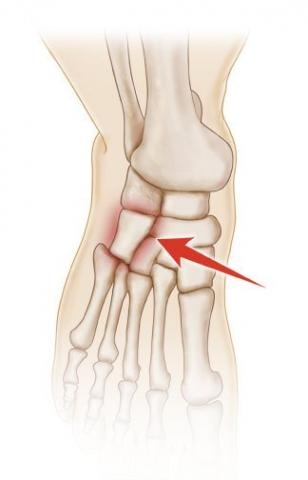
The cuboid bone is located roughly at the midpoint of the outer side of the foot, and together with the other tarsal bones, it forms the arch of the foot. Other structures that may be involved in the injury include the calcaneocuboid joint and the surrounding ligaments.

IMAGE FROM FOOT VITALS WEBSITE.

What Causes Cuboid Syndrome?
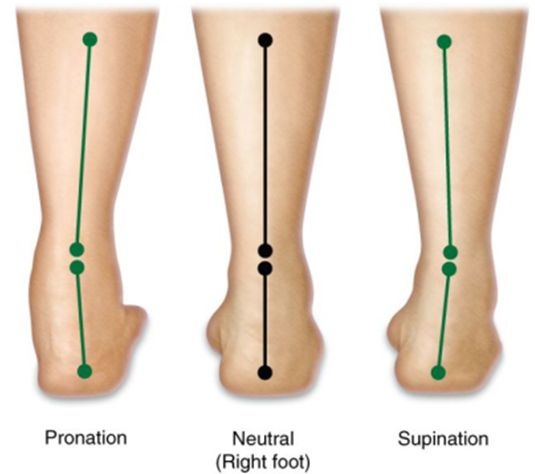
Typically it is athletes who develop cuboid syndrome, either after an injury, or as foot pain that appears without a noticeable injury. One study showed that as many as 80 percent of cuboid syndrome patients also have pronated feet (flat feet). Cuboid syndrome is often associated with repetitive movement of the foot, such that which occurs during running or dancing.

Signs and Symptoms.  Cuboid syndrome may cause pain in the lateral midfoot and under the arch of the foot, especially when walking.  Patients may avoid putting weight on the affected foot.

Diagnosis.  Cuboid syndrome can be difficult to diagnose — and may be misdiagnosed — partially because it is not well understood, but also because there are often no physical findings on an x-ray, CT scan, or MRI.

  • Pain: Palpating the area may be painful for the patient; some swelling can be present. Hopping on the affected foot may also be painful.
  • Decrease in motion: Patients with cuboid syndrome may find inversion ankle movement to be painful.
  • Uneven gait: Patients with cuboid syndrome may exhibit an antalgic gait — i.e., they seek to avoid putting weight on the affected foot. Pain during walking may occur as the foot pushes off the floor.


Treatment
Manipulation: Treatment of cuboid syndrome involves manipulation of the cuboid.  After manipulating the cuboid bone, the clinician may further manage the patient’s discomfort with massage, cryotherapy (ice), non-thermal ultrasound, or electrical stimulation. In some cases, manipulation may need to repeated.

Padding and taping: Supporting the cuboid bone with padding or a wedge may help prevent recurrence. Taping may also be used to support and stabilize the bones of the midfoot.

Orthotics: Because many people who develop cuboid syndrome also overpronate, orthotics may be useful in preventing recurrence.

Exercise: The clinician treating the cuboid syndrome may prescribe some exercises that can help with symptoms and prevent the injury from occurring again. These exercises could include stretching the ankle up and down or in and out for a number of repetitions several times a day. 

20 years of Involvement in the Community.

Special newsletter.

Photo: Peter Zeeman.

On September 9th 2000, Dr Patrick Lepage, chiropractor, welcomed his first patients in his St-Lazare clinic, then located at the junction of Bédard Street and Sainte-Angélique Street. Freshly graduated from l’Université du Québec à Trois-Rivières he was in the 3rd cohort of chiropractors to complete their studies in a Quebec university. Originally from Rimouski, he chose Saint-Lazare because the city’s population reflected the clientele he wished to help.

Only a few months after the St-Lazare clinic’s opening, the young chiropractor opened a second location in Valleyfield. In 2003, he was a finalist for Vaudreuil’s chamber of commerce gala in the category “young entrepreneur of the year”. While growing his business in Saint-Lazare, Dr Lepage also worked at Pierrefond’s medical center from 2007 to 2011. In 2008, he bought the building on 2010 Chemin Sainte-Angélique where he moved his clinic and made it his main focus.

Involved from the Start

From the grand opening of the clinic, Dr Lepage got involved in the community on multiple levels: he is a member of sport leagues, he raises money for local charities (for example Guignolée), he acts as a medical aid in sport teams, etc. Since 2013, he organizes three fundraisers a year for Leucan Montérégie with the clinic. Over the years, Dr Lepage’s chiropractic center has raised over 27 000$ which was distributed to local and regional charities. The chiropractor’s team is also involved in the Brian Liew Race. Its 7th edition will take place September 12th 2021.

Team

Even though some changes occurred over the years, Dr Lepage has maintained a welcoming and dynamic team. The team is formed of two chiropractors, two assistants and a massage therapist. Élodie Desprez has been a part of the team for 18 years; she is greatly appreciated by her clientele and offers an exceptional service for many massage therapy needs.

2018 marks the arrival of a 2nd chiropractor to the clinic, Dr Alexandra Occean. Her presence made for an easier access to a chiropractor and diversified the clinic’s services. Originally from Vaudreuil-Dorion, she is attentive to her patient’s needs and has already built a solid clientele. 

Dr Lepage’s chiropractic center’s team also includes two assistants, Camille and Geneviève, who welcome all patients warmly and efficiently.

Cutting Edge Technology

In august 2019, the chiropractic center swapped its conventional radiology equipment for an entirely numeric system. This technology presents many advantages such as: improved image resolution, the images can be instantly analyzed, greater precision for diagnosis, to only name a few. Furthermore, unlike the chemically developed images, this system doesn’t have a negative impact on the environment. The clinic also has the equipment to offer ultrasound therapy, which is especially useful when treating sport related injuries. Dr Lepage’s and Dr Occean’s clientele is increasingly focused on active individuals or athletes.

Future Projects

Dr Lepage’s chiropractic center has a constantly growing cliente. The building might get an extension in the next few years. This would allow for a third chiropractor to join the team and to have an additional room specifically for the diagnosis and treatment of sport related injuries.

3 Things you need to know about TMJ pain.

August 2020 newsletter.

Image and text: Canadian Chiropractic Association.

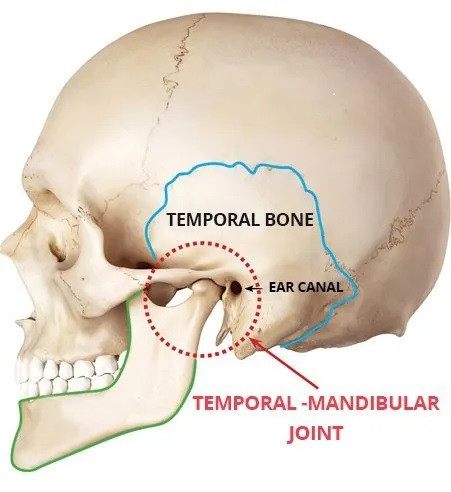
Temporomandibular join pain, or jaw pain, can be debilitating – just ask Dr. Sasha Hamid, a chiropractor in Ottawa. When she was in middle school, she started experiencing severe headaches. Her jaw would get stuck in place and sometimes dislocate. The pain was so severe that she could not concentrate at school and was unable to participate in extracurricular activities.

IMAGE FROM FOOTHILLS ORTHOPEDIC & SPORT THERAPY WEBSITE.

Sasha was born with a small jaw and needed surgery to relieve her pain, but she could not have it until she was off the pain medications that were getting her through the day for six months. Unsure how she would manage this pain without medication, her surgeon referred her to a chiropractor.

“My chiropractor was the first person to explain why this was happening in a way that I understood,” says Dr. Hamid. “He gave me exercises and put me in control of managing my pain. Thanks to him, I was completely off any pain medications within six months and was able to manage the symptoms through acupuncture, stretches, and manual techniques.”


1. The causes of TMJ pain

The bones of the TMJ are separated by a disc of cartilage to keep your jaw moving smoothly. When those muscles become irritated, the disc is displaced. Common symptoms include popping, a clicking sound or sensation, muscle tenderness, joint tenderness, and being unable to open your jaw wide.

There are three main categories of TMJ pain:

  • The most common is in the muscles that control the jaw and the connecting neck and shoulder muscles;
  • Internal disorder of the joint, or a dislocated or displaced disc; and
  • A degenerative joint disease in the jaw joint, like arthritis.

Your risk of developing this pain is increased by jaw injury, stress, or grinding and clenching your teeth.


2. Managing TMJ pain

There are several things you can do to treat or reverse TMJ-related pain:

  • Eating softer foods
  • Applying ice packs
  • Avoiding extreme jaw movements
  • Learning techniques to relax and reduce stress
  • Practicing gentle stretching of the jaw to help increase its movement
  • Soft tissue massage


3. Chiropractors can help

Chiropractors can help in a number of ways, including:

  • Joint manipulation to help restore movement
  • Nearby muscle release by going through the mouth

Talk to your chiropractor about a treatment that is right for you.

Last update: May 29th, 9 am.

Important Message: Resumption of Regular Chiropractic Care

Regular chiropractic care will resume from June 1 onwards, in line with the recent directives issued by the Québec Government and the Ordre des chiropraticiens du Québec.

You can call or e-mail us now to make an appointment on or after June 1:

  • Telephone: 450-455-9822
  • info@drlepagechiropraticien.com

A stringent health protocol has been in place at our clinic since the end of March and will be maintained until further notice. You also need to go through the Covid-19 questionnaire (see below).

Once at the clinic, we ask you to wear a mask, disinfect your hands when you arrive, and keep a distance of two metres between yourself and our reception staff and other patients. If you have your own mask, please wear it. If not, we can provide one. You must also come to the clinic alone if possible, and leave your personal effects in your vehicle. 

Your chiropractor and all our staff will continue to comply rigorously with current health directives for private healthcare clinics.

We look forward to seeing you again – even with your masks!

______________________________________________________________________________

Covid-19 pre-consultation questionnaire:

1- Did you test positive for Covid-19 in the last 21 days or waiting for your test results?

2. In the past 14 days have you returned from travel outside Canada?

Do you have any of these symptoms?

3- Fever (>38°C);

4- Recent onset of cough or worsening of an already existing cough;

5- Difficulty breathing;

6- Loss of taste;

7- Loss of smell;

8- Muscle aches, headache;

9- Sore throat;

10- Diarrhea;

11- Have you been in close contact (at least 15 minutes within less than 2 meters) with someone diagnosed with COVID-19 without adequate personal protective equipment?

If you answered yes to one the the questions 1, 2, 3, 4, 5, 6, 7 and 11 or if you answered yes to two of the questions 8, 9 and 10, you cannot be seen by one of our chiropractors. 

_____________________________________________________________________________

For information and appointments:

  • Phone: 450-455-9822
  • Email: info@drlepagechiropraticien.com
  • Messenger: click here
  • Text message (please mention your name): 514-705-9470

Falls Prevention, part 2.

June 2020 newsletter.

Image and text: Canadian Chiropractic Association.

Taking a tumble can cause serious injury that affects your everyday life and
independence. One of the best ways you can reduce your risk of slipping, tripping and falling is to improve your strength and balance. Almost any kind of physical activity is helpful – but some activities deliver greater benefits than others.

undefined

Strong Legs for Stability
Strengthening your leg muscles can reduce the chance of falling if you do lose your balance. Strong legs will stabilize you and can make the difference between staying on your feet and hitting the ground. While any activity that uses your legs is good, it’s important to find something you enjoy. The best exercise plan in the world won’t help if you don’t want to do it. Here are some ideas:

Brisk Walking
Walking requires no special equipment other than a pair of supportive shoes. Make an after-dinner walk part of your routine or
leave the car in the driveway and take a walk to pick up light groceries. There are many simple ways to get moving more often.

Strength Training
Exercises that target specific leg muscles can be easily done at home – there’s no need to join an expensive gym. If you enjoy
being with a group, community centres often have exercise programs for different age groups. Here’s a simple strengthening
exercise to try:

Leg extensions:
This exercise can be done while watching TV or sitting at the kitchen table.
While seated, straighten-out one leg and gently lift it off the ground to a
height that’s comfortable for you. Hold for 10 seconds if you can. Put that
leg down. Extend and lift the other leg. As your strength grows, add ankle
weights to give your legs even more of a work out.

undefined

Boost Your Balance
Your sense of balance is what keeps you on your feet – without it you would not be able to stand upright. Poor eyesight, some medications and some health conditions can cause dizziness or other balance problems.

Strength and balance work together to keep you steady. There are many activities that contribute to maintaining and improving balance – and help build strength. Swimming is a good choice if you enjoy the water. Cycling is appropriate for people who feel comfortable on a bike. Wear protective gear such as a helmet. Tai Chi benefits balance, strength and flexibility. It also encourages mental focus, concentration and calmness. Yoga can be adapted for any age. It offers benefits similar to Tai Chi. Golf gets you walking, and using a club requires balance and coordination. Dancing is a great workout for your legs. Put on your favourite music and practise your steps in the living room.

These are just a few ideas to consider. Remember, anything that gets you on your feet and moving will help maintain strength
and balance.

What’s a Good Goal?
Aim for 20 minutes of exercise at least three days a week. Even better – build some activity into every day. Your independence
is worth it.

Ergonomics Checklist

Special newsletter.

Image and text: Direction de la santé publique de Montréal-Centre.

During the mandatory self-isolation, most people spend more time in front of screens. Teleworking has also become very common. Following this ergonomics checklist will help you staying away from musculoskeletal pain.