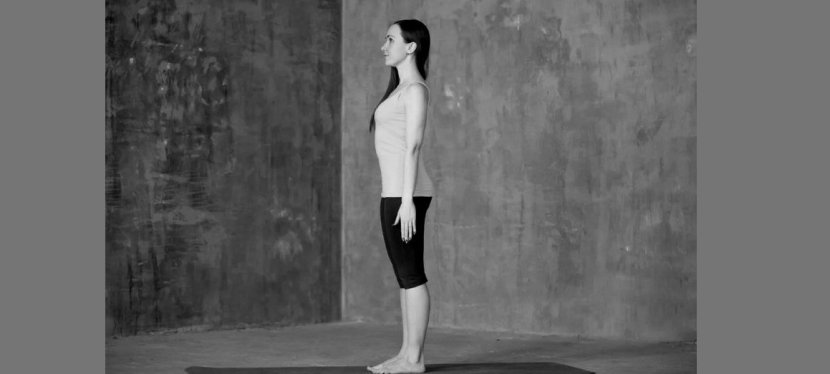
Posture perfect: maintaining the spine’s natural curves.

December 2023 blog.

Good posture not only makes you look better, it also delivers increased energy, better breathing, improved circulation, and less wear and tear on your joints. It’s an investment in both your appearance and your health.

The secret to good posture is maintaining the spine’s natural curves. If your spine is not properly aligned, your muscles and ligaments have to work harder to keep you upright and this can result in strain and pain.

When you slouch, you also put pressure on your lungs and stomach. This can affect breathing and digestion, as well as blood flow.

The Posture Test

Use a three-way mirror or have a friend help you check out these markers:

  • When standing: your head, shoulders, hips and ankles should line up, one comfortably above the other. Your knees should be slightly bent and your feet should be shoulder width apart or more.
  • When looking at your back: are your shoulders and hips level or is one side higher than the other? Does your head tilt to one side or the other? Does one shoulder blade seem to be more prominent than the other? Do the muscles of the back seem more developed on one side, compared to the other? A healthy back should be symmetrical.
  • When looking from the side, your neck and low back should curve to the front of your body, and your mid-back and pelvis should curve to the back. Postural distortions in the curves of your spine mean stress and strain on your back.

Tips for Standing Tall

  • If you use a bag or briefcase with a single shoulder strap, choose a strap that is long enough to place over your head and rest on the opposite side from the bag. This helps distribute the weight of the bag evenly and prevents distorting your posture.
  • High heels throw your spine out of alignment, making good posture difficult and often leading to low back pain. A low-heeled, supportive shoe is best, but if you are devoted to your fashion footwear, try to restrict the height to no more than two inches.
  • Try not to sit in any one position for a long period of time. Take a quick stretch break or change positions every 30-45 minutes. For a quick and easy spinal stretch, stand up and raise your arms above your head.
  • Strengthening your core back and abdominal muscles will help promote good posture by keeping your spine well supported.

Canada’s chiropractors are specialists in back health. If you are concerned about your posture, consider an evaluation.
Sports Chiropractic

Over the past 24 years, we have helped more than 5000 people to relieve their pain, correct their posture and find lasting solutions in order to maintain optimal health. Also, many athletes at all levels were able to resume competition and perform at their personal best, thanks to the diagnosis and treatment of musculoskeletal injuries we offer.

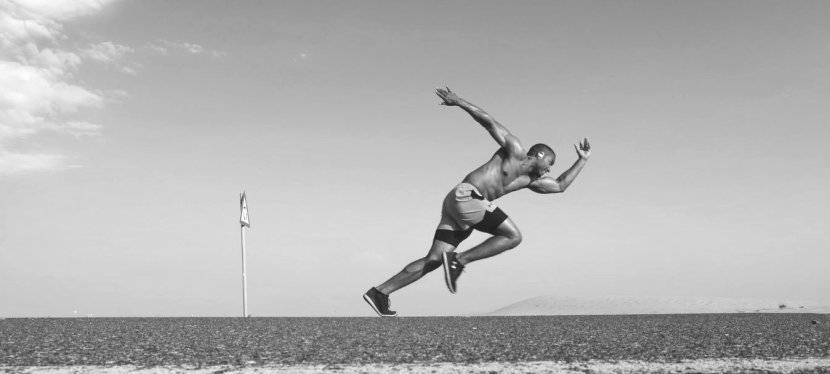
With the growing popularity of running, many of our patients practice this activity with passion and commitment. Dr. Lepage being a marathoner himself, our patients arevery confident in the diagnosis and treatment of injuries related to running, in the preparation forlong-distance events or simply to learn how to start running without injury.

5 Exercises For Plantar Fasciitis.

October 2023 blog.

Getting up after sitting for a while, only to be struck with pain in your heel, is something that many athletes had to face in the past. The pain doesn’t just get worse in this case, but you may also struggle to walk. One common cause behind this type of pain among athletes and runners include plantar fasciitis. The condition causes pain and swelling in the plantar fascia, and without proper remedies, the symptoms can get worse.


What Are The Best Exercises For Plantar Fasciitis?

There are different ways to deal with plantar fasciitis. Usually, a couple of at-home strategies work really well. This includes ice packs and a lot of rest. You can also wear a brace if the injury is more serious and take over-the-counter medication to help with pain and inflammation. In addition to these strategies, it’s important to consider doing some exercises for plantar fasciitis. There are many exercises that can help to target muscles, tendons, and other tissues in your feet.

1. Calf Stretch.

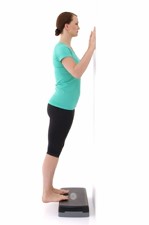
Stand against a wall or a chair. Place your hands on the wall and lengthen your arms. Pull the affected leg backward while bending the other leg forward toward the wall. Now, bring the foot that is bent forward, but keep the heel of the foot with plantar fasciitis planted on the floor.  Hold it for about 15 seconds at first, then return to the starting position

2. Heel Raises.

If you have a more significant level of pain in your heel, make sure you stand somewhere with support that you can hold onto. It’s best to choose a step where you can keep the balls of both feet stable, with an opening at the back. Hold onto the rails while you perform this exercise. Your heels should hang off the back edge of the step. Slowly lower your heel downward off the ledge. Don’t overdo it. If you feel a stretch in your calves, stop. Now, bring your heel upward. You’ll now raise your body a bit so that you stand on the balls of both feet.

3. Crossover Fascia Stretch.

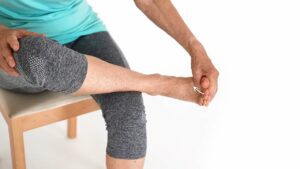
Sit down on a chair with both knees at a 90-degree angle and your feet planted on the floor. Take the injured foot and cross it over the knee of the leg that is not affected. If both your feet are affected by plantar fasciitis, then you should alternate between them. As you cross your leg over the other knee, take hold of your feet. Place your hands close to your toes. You should now pull slightly to bring the toes closer to your shin. It’s important to try and hold this position for around 15 seconds before you let go.

4. Plantar Fascia Massage.

The plantar fascia massage requires a golf ball and a standing or seated position. You should be barefoot while you perform this massage technique. Place the golf ball on the floor, then put your injured foot on top. Now, use your feet to roll the ball gently. You want to move your feet from heel to toe as you roll it.

5. Toe Towel Scrunches.

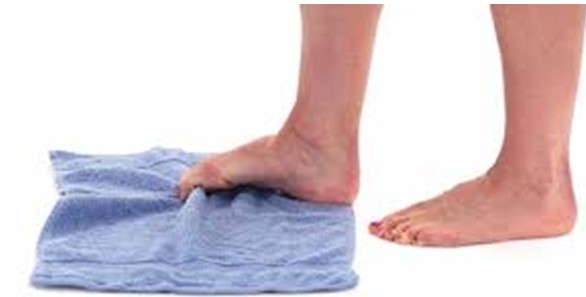
Get a towel and place it flat on the ground. In a seated position, keep your back straight up and then rest your injured foot on the towel. Spread your toes apart. Now, use a curling motion with your toes to grab the towel with your feet, then relax and return to the starting position.

Conclusion

Plantar fasciitis can be painful and make it difficult to go about your daily routine. With the right exercises, you can not only speed up recovery but also reduce the risk of the same injury recurring in the future.

Pack It Light. Wear it Right.

August 2023 newsletter.

Source : Canadian Chiropractic Association

It’s common for kids to lug around backpacks appearing to be twice their body weight. Though it may seem cool to sling a heavy load over one shoulder – long-term head, neck and shoulder pain is not. Here are some helpful tips that will help your child carry their backpack with ease.

Backpacks can affect your child’s health

Carrying a heavy load can lead to poor posture and a distorted spinal column. Over time this can cause muscle strain, headaches, back, neck and arm pain, and even nerve damage.

A heavy backpack carried on one shoulder forces the muscles and spine to compensate for the uneven weight. This places stress on the mid and lower back.

Choose the right backpack

  • Select a lightweight backpack in vinyl or canvas.
  • Pick a backpack with two wide, adjustable and padded shoulder straps, along with a hip or waist strap, and padded back.
  • Try the backpack for fit and comfort – ensure it’s not too snug around the shoulders and armpits, and that it’s proportionate to the wearer’s body type.

Packing it properly

  • Your child’s backpack should only contain what is needed for that day.
  • A full backpack should be no more than 10 to 15 per cent of the wearer’s body weight.
  • Place the heaviest objects close to the body and light or odd-shaped objects away from the back.

Putting the backpack on

  • Place the backpack on a flat surface and slip on the backpack one shoulder at a time, adjust the straps to fit comfortably.
  • When lifting the backpack use both arms and legs, and bend at the knees – give young children a hand.


Wearing a backpack

  • Backpacks should never be worn over only one shoulder – this can result in neck, shoulder and back pain.
    •Both shoulder straps should be used and adjusted so the backpack sits flush against the back.
    •Test the fit of the backpack by sliding your hand between the backpack and your child’s back – if you can’t slide your hand in, the backpack is too snug.

4 Easy Stretches for Golfers.

June 2023 blog.

Source: Canadian Chiropractic Association.

Stretching can offer a variety of benefits for golfers. Golf stretches prevent shoulder, knee or back pain is essential to continue to enjoy the game. Try these chiropractor recommended stretches below:

1. Hip flexor lunge

Stand with your feet shoulder width apart. Step one foot forward into a lunge position. Keep your body upright and back straight. Bend both knees so that you feel the stretch. Do not let your forward knee pass over the ankle of your front foot. Use a golf club to keep your balance. Hold 15 seconds. Repeat twice on each side.

2. Side bending stretch

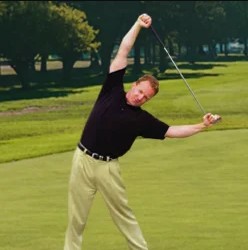
Stand with feet shoulder width apart. Hold the golf club above your head with your arms straight. Slowly bend to one side, without rotating, until you feel a stretch along the side of your back. Hold 15 seconds. Repeat twice on each side.

3. Seating twist

Sit on a bench or golf cart with your knees together and feet flat, pointing forward. Reach across the front of your body and grasp the back of the bench or cart. You should experience a stretch in your spinal muscles. Hold 15 seconds. Repeat twice on each side.

4. Seated forward bend

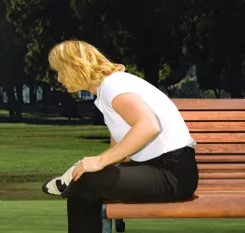
Sit on a bench or golf cart, knees bent and feet flat. Place one ankle onto your opposite knee, and relax this leg so that your knee falls out to the side. Slowly bend forward, keeping your back straight. You may gently pull on your bent knee to generate a deeper stretch. You should feel a stretch in your buttock area. Hold 15 seconds. Repeat twice on each side.

If you are suffering from an injury that is preventing you from playing golf or if you would like to increase your mobility to improve your performance, a chiropractor can help.

Advanced Imaging. Part 2.

April 2023 blog.

Image: International Journal of Spine Surgery

Chiropractors are now able to prescribe advanced medical imaging tests as well as conventional x-rays for their patients. They can request magnetic resonance imaging tests, scans, ultrasounds or a bone density test, according to the needs of the patient.  In order to provide these new professional services, chiropractors must demonstrate that they have acquired the necessary skills and knowledge and have completed the necessary additional training.  In this second part of our blog, we discuss specific situations in which your chiropractor may prescribe advanced imaging

Case #1.   A 38-year-old man visited his chiropractor with lower back pain radiating to the right leg.The pain had started 3 weeks earlier and for no known reason.Following the consultation, examination and x-rays, the chiropractor diagnosed lower back pain (lumbago)caused by vertebral subluxations, as well as “radiculopathy” (a pinched nerve), which is an irritation of the spinal nerve roots. After 4 weeks of chiropractic treatment combined with exercises done at home, the back pain was almost completely resolved and the symptoms in the lower right leg improved by 50%.However, by the next visit, the leg pain was back and was now associated with a lack of strength and loss of sensation in the calf and several toes.Upon discussion, the patient and the chiropractor agreed to continue the chiropractic care and the exercises for another 2 weeks.Unfortunately, the pain and other symptoms persisted and even seemed to be getting worse despite all efforts to improve the situation.

According to the INESSS guide on the optimal use of MRI for musculoskeletal pain in adults (guide d’Utilisationoptimale de l’IRM dans les cas de douleursmusculosquelettiques chez les adultes): “In the presence of non-traumatic lower back pain, an MRI is generally not recommended before a minimum period of 4 to 6 weeks of conservative treatment unless serious disease is suspected.An MRI is indicated in the presence of significant or progressive neurological deficits or in cases of suspected infectious disease or tumour pathology.”In this case, with the patient suffering from significant or progressive neurological deficits despite 4 to 6 weeks of treatment, MRI could be indicated.

It is important to mention that when a chiropractor prescribes specialized imaging, the associated costs will not be covered by Quebec health insurance, so the patient will have to pay out of pocket.The patient may also choose to be referred to a physician who could prescribe medical imaging covered by the Quebec health insurance plan.

Case #2.   A 22-year-old tennis player arrives with pain in her right shoulder that started a few weeks earlier, during a match.The young woman had already had X-rays which were normal.The chiropractor diagnosed rotator cuff tendonitis and started treatment with a series of rehabilitation exercises.The player also reduced the frequency and intensity of her workouts.The pain slowly improved, so that three months later she was able to compete almost normally.During a tournament, however, she felt a sharp pain in her shoulder while serving.She went backto her chiropractor, but this time things did not go as well.Several months of treatments and exercises were necessary for a meagre 20% improvement.The chiropractor suspected a shoulder tendon tear.He recommended an ultrasound of the shoulder.

Diagnostic ultrasound is very useful for evaluating superficial soft tissues (tendons, muscles, etc.), i.e.close to the surface.The rotator cuff of the shoulder is a good example.This examination does not expose the patient to any radiation and is less expensive than an MRI.

In conclusion, it should be noted that chiropractors can only prescribe advanced medical imaging examinations when these examinations are within their scope of practice, within their skills and knowledge and of course, when required by the patient’s condition.

Advanced Imaging. Part 1.

February 2023 blog.

Image: International Journal of Spine Surgery

Chiropractors are now able to prescribe advanced medical imaging tests in addition to conventional x-rays for their patients. They can request magnetic resonance imaging tests, scans, ultrasounds or a bone density test, according to the needs of the patient.

In order to provide these new professional services, chiropractors must demonstrate that they have acquired the necessary skills and knowledge and have completed the necessary additional training. This significant advance was made possible through the collaboration of the Collège des médecins du Québec, the Ordre des technologues en imagerie médicale, radio-oncologie et électrophysiologie médicale du Québec and the Ordre des podiatres du Québec. These new activities will give the people of Québec access to an accurate diagnosis and appropriate care in the shortest possible time, while contributing to the increased efficiency of the public health system. In this first part of our blog, we introduce you to each of the new imaging procedures that your chiropractor can prescribe in addition to conventional x-rays.

Tomodensitometry

Commonly referred to as a “scan” or “CT scan”, it is also known as a CAT scan and Computerized axial tomography. The CT scan is very sensitive when it comes to detecting diseases and abnormalities of soft tissue, bone and other anatomical structures. Images are acquired very quickly using this technique. One disadvantage is that the patient is exposed to moderate to high doses of radiation.

Bone Density Scan

Bone densitometry is used to measure bone density. It can be used to check for osteoporosis (a decrease in bone density that makes the bones more fragile). It is worth noting that a standard x-ray is not useful for diagnosing osteoporosis. The radiation emitted during such an examination is very low for the patient.

Diagnostic Ultrasound or Ultrasound

As suggested by its name, this technique uses sound waves to create an image. In addition to being used extensively in obstetrics, ultrasound is useful for evaluating soft tissues such as tendons, muscles and ligaments. A good example of when diagnostic ultrasound is used is to visualize shoulder tendons such as the rotator cuff. The cost of this technology is relatively low and the patient is not exposed to radiation. The structures to be visualized must, however, be superficial (just below the skin).

Magnetic Resonance Imaging (MRI)

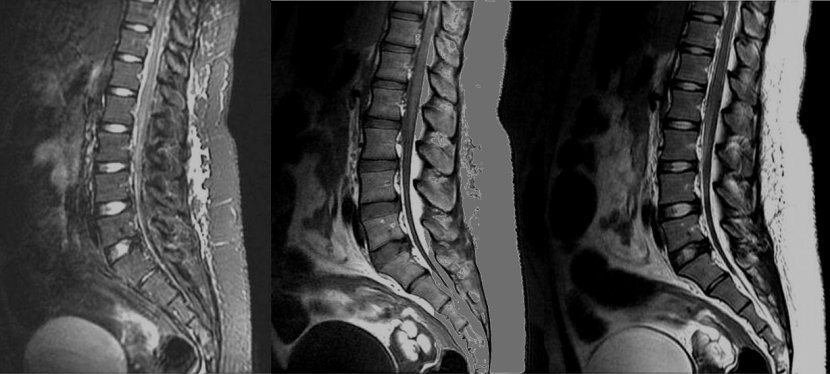
MRI allows for a very detailed evaluation of the “soft” parts, i.e.,joints, bone marrow and nerve structures (nerves, spinal cord, etc.). It is frequently used to diagnose spinal nerve compressions, such as those resulting in herniated discs. The patient is not exposed to any harmful radiation with the MRI.However, it is very expensive and obtaining the images takes a long time. There are also several contraindications to this examination (pacemaker, subcutaneous insulin pump, pregnancy, orthopedic prostheses, etc.).

These are the 4 types of advanced imaging that chiropractors can now prescribe in addition to X-rays. Chiropractors may do so when it is within the scope of their practice, within their skills and knowledge and of course when required by the patient’s condition.

In Part 2 of this blog, we will discuss specific situations in which your chiropractor may prescribe advanced imaging.

4 Fitness Motivators to Help You Get Started.

December 2022 blog.

Source: Ontario Chiropractic Association.

Do you want to be more active, but have trouble getting motivated? Starting a new habit and sticking to it is difficult for many people. So many things get in the way and your favourite comfy chair or TV program can look very enticing after a long, busy day. But did you know that fitting in just 15 minutes of focused activity each day can start you on the way to an energized lifestyle? Who knows where it will take you.

1. Have a distraction

Research studies show that people who have a distraction are more likely to stick with a fitness activity than people who don’t. Brisk walking outdoors provides its own distractions. The scenery and street activity will keep your senses occupied, while your feet keep you moving. If you are fitting in your 15 minutes indoors, listen to the radio, play music you enjoy or workout while watching your favourite TV program.

2. Have a buddy

Research studies also tell us that people who get active with a buddy find it easier to stay active. Invite your partner, a friend, neighbour, relative, one of your children or bring along the family dog to join you for a 15-minute walk or workout. Make it a time to talk, laugh and connect.

3. Pick a specific time of day

Decide on the best time of day to set aside your 15 minutes so it becomes something to look forward to. Then you can schedule other activities around it. Keep to your scheduled time as much as possible.

4. Try not to miss a day

Think of fitting in 15 minutes as a regular daily activity – like taking a shower in the morning. It can be easy to find reasons not to fit in 15. There are always so many other things to do. But the more you fit it in, the easier it gets until you hardly have to think about it. If you miss a day or two, don’t give up! Just fit it in again as soon as you can.

Canada’s chiropractors are committed to helping Canadians be more physically active. A chiropractor can evaluate your strength and flexibility, and screen for anything that may limit your physical activities. Ask your chiropractor for an evaluation. 

Posture perfect.

October 2022 blog.

Source: Canadian Chiropractic Association.

Good posture not only makes you look better, it also delivers increased energy, better breathing, improved circulation, and less wear and tear on your joints. It’s an investment in both your appearance and your health.

The secret to good posture is maintaining the spine’s natural curves. If your spine is not properly aligned, your muscles and ligaments have to work harder to keep you upright and this can result in strain and pain.

When you slouch, you also put pressure on your lungs and stomach. This can affect breathing and digestion, as well as blood flow.


The Posture Test

Ask someone to take side view, back and front photos of yourself:

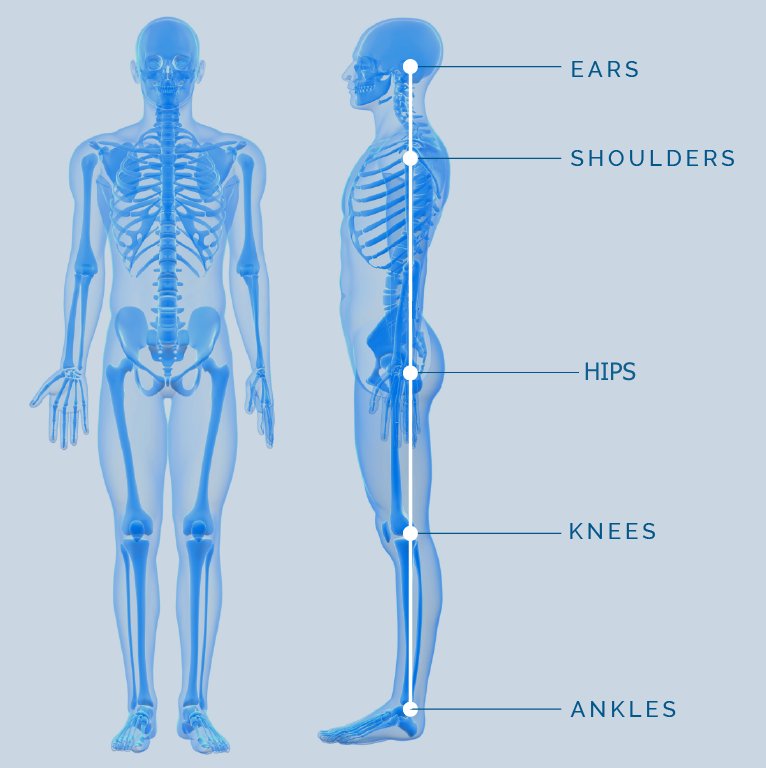
  • When standing: your head, shoulders, hips and ankles should line up, one comfortably above the other. Your knees should be slightly bent and your feet should be shoulder width apart or more.
  • When looking at your back: are your shoulders and hips level or is one side higher than the other? Does your head tilt to one side or the other? Does one shoulder blade seem to be more prominent than the other? Do the muscles of the back seem more developed on one side, compared to the other? A healthy back should be symmetrical.
  • When looking from the side, your neck and low back should curve to the front of your body, and your mid-back and pelvis should curve to the back. Postural distortions in the curves of your spine mean stress and strain on your back.
From the side, your ear, shoulder, hip, knee and ankle should be vertically aligned.
Image credit: rehabconceptspt.com

Tips for Standing Tall

  • If you use a bag or briefcase with a single shoulder strap, choose a strap that is long enough to place over your head and rest on the opposite side from the bag. This helps distribute the weight of the bag evenly and prevents distorting your posture.
  • High heels throw your spine out of alignment, making good posture difficult and often leading to low back pain. A low-heeled, supportive shoe is best, but if you are devoted to your fashion footwear, try to restrict the height to no more than two inches.
  • Try not to sit in any one position for a long period of time. Take a quick stretch break or change positions every 30-45 minutes. For a quick and easy spinal stretch, stand up and raise your arms above your head.
  • Strengthening your core back and abdominal muscles will help promote good posture by keeping your spine well supported.

Chiropractors are experts in back health. If you are concerned about your posture, consider an evaluation.
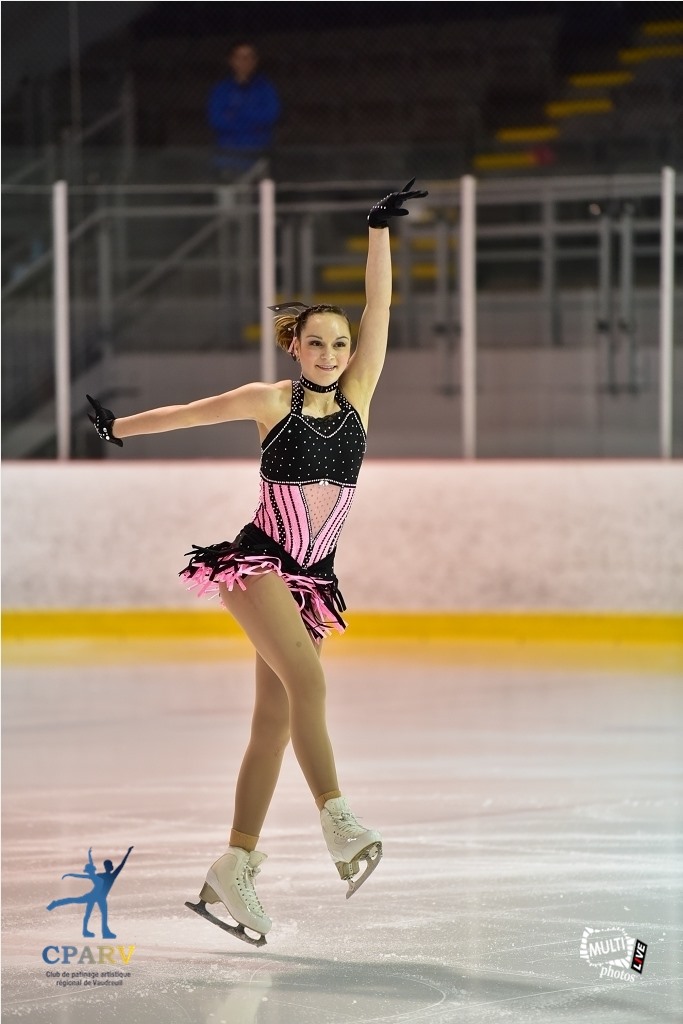
Audrey Héneault: Steady and Straight on the Triple Loop .

August 2022 blog. Chiropractic care for figure skaters.

Figure skating is one of the most demanding sports, both physically and mentally. We see figure skaters as graceful and elegant when we watch them float across the ice, but this grace and elegance involves many hours of practice, both on and off the ice, before they can deliver a superior performance. Falls and repetitive movements often result in injuries. The most common injuries include Achilles tendinitis, tendinitis of the lower limbs, patellofemoral syndrome, sacroiliac pain and stress fractures.

Audrey Héneault started figure skating at the age of 6. Now 17 years old, she trains at the École de patinage LMK International Skating School in Laprairie under the guidance of several coaches, including Lynn McKay and Éric Bernard.

“I know that I can count on my chiropractor for effective and prompt treatment of my injuries.
Chiropractic care also helps me to maintain good posture” 

– Audrey héneault
Photo credit: Multi photos.

Audrey also underwent her first chiropractic adjustments at the age of 6. Dr. Patrick Lepage, chiropractor, has treated her for her various injuries and muskoskeletal pain, often due to learning new jumps or to falls during training, for the past 11 years. “I know that I can count on my chiropractor for effective and prompt treatment of my injuries. Chiropractic care also helps me to maintain good posture”, says this native of Vaudreuil.

She is currently working on the triple loop, which consists of three complete rotations.“Just like for the other jumps, I need muscular, as well as mental strength” says this athlete, now a resident of Mercier.

Click here to watch Audrey’s performance.

“The muskoskeletal system must obviously be at its best for the body to performthese high-flying jumps, due to the explosive movements needed for the upward propulsion of the skaters, in order to potentially succeed in competition.Calves, Achilles tendons and knees are put under great pressure, both during thrust and landing” according to Dr. Lepage, chiropractor.

Last November, Audrey won the silver medal in the free skate program at a Patinage Québec competition. “I am rather proud of my accomplishments when it comes to competitions because I don’t skate for the medals, but rather to constantly improve myself. Still, I am very proud of my performance in the free skate program last November. All of my jumps were successful, I managed to get a high score and I won the silver medal” (click on the video to watch her performance).

The skater plans to pursueher sport as long as possible.“Skating is physically very demanding, but I want to skate as long as my body allows” says the CEGEP student, who would like to pursue a career in the health field.

Photo credit: Danielle Earl